

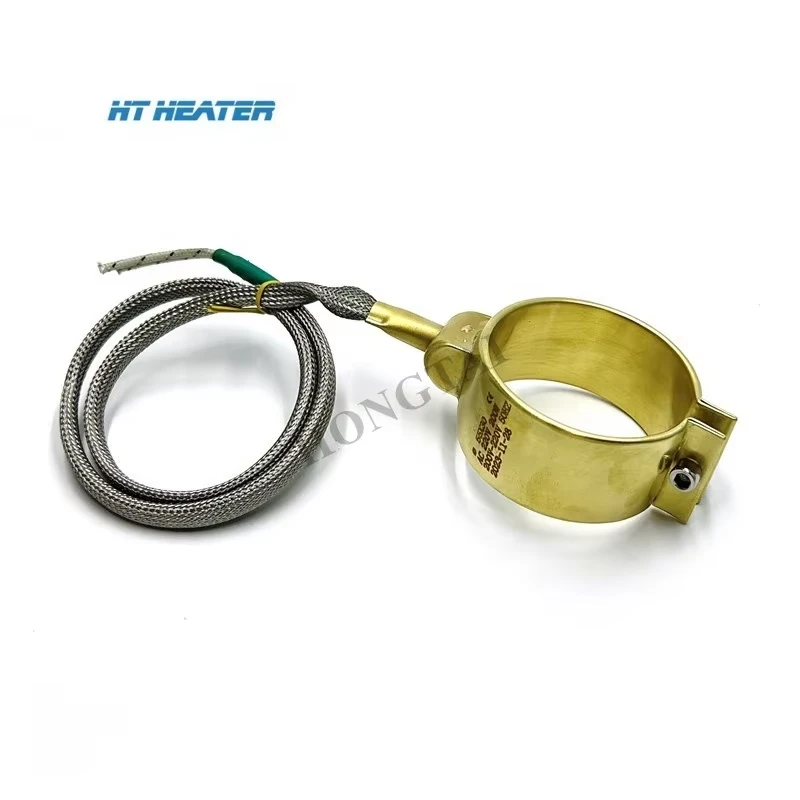
During high-pressure injection molding operations, nozzle drooling and resin degradation frequently cause molten polymer to seep into heating bands. Standard unsealed heaters suffer from chemical contamination, internal carbonization, and catastrophic electrical short circuits when plastic drool enters the element housing. While larger processing zones utilize robust insulation architectures as discussed in Ceramic Band Heaters for High-Temp Extrusion: Engineering Guide, nozzle interfaces demand tight geometric clearance combined with complete fluid isolation. As a premier industrial thermal manufacturer, Hongtai Alloy factory produces Hongtai sealed brass nozzle heaters engineered with seamless, hermetically sealed brass sheaths. This design creates an impenetrable barrier against polymer ingress, delivering high thermal responsiveness, long service life, and reliable performance under high-pressure processing conditions.
1. Injection Nozzle Failure Dynamics & Polymer Drool Hazards
The injection nozzle operates under extreme thermal cycling and intense hydraulic pressure. Unshielded nozzle heating elements face distinct physical mechanisms that lead to premature failure:
Polymer Melt Ingress & Carbonization: Molten resin drooling from nozzle tips migrates under the edges of conventional band heaters. Under continuous heat, trapped plastic carbonizes, creating a conductive bridge that triggers immediate earth leakage and short circuits.
Lead Wire Strain & Terminal Damage: Plastic buildup around exposed terminal posts makes element removal nearly impossible during routine maintenance, often tearing lead wires and destroying the heater band.
Thermal Lag & Degraded Response: Accumulated plastic scale between the heater and nozzle body creates an insulating barrier. To offset this thermal impedance, operators often consult Mica Band Heaters: Selection & Installation Guide for Injection Molding for proper surface clamping protocols to prevent localized coil burnout.
2. Hermetic Brass Sheath Architecture & Seal Physics
Hongtai sealed brass nozzle heaters integrate a multi-layer protective enclosure designed specifically for space-constrained, high-drool molding environments.
2.1 Seamless Hermetic Brass Enclosure
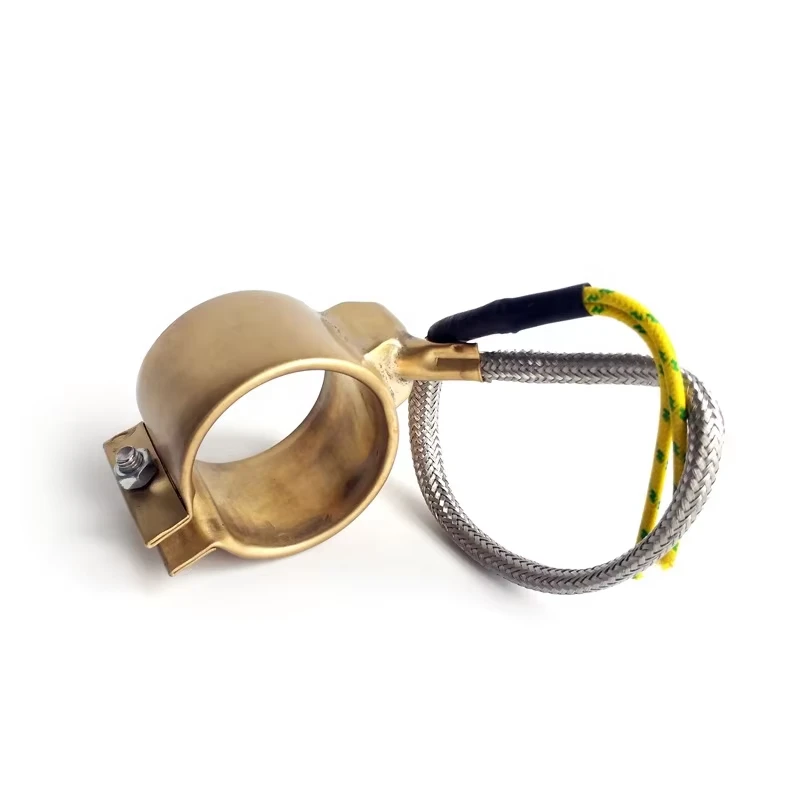
Hongtai utilizes precision-folded, seamless brass stock to encase the internal mica insulation and Ni80Cr20 resistance ribbons. Brass offers superior thermal conductivity for rapid heat response while providing a completely sealed exterior casing that prevents liquid plastic penetration.
2.2 Embedded Lead Wire Exit & Strain Relief
To eliminate the weak link found in standard terminal posts, Hongtai elements incorporate an embedded lead wire transition sealed directly into the brass housing. Paired with flexible stainless steel armor, this design resists chemical attack, mechanical flexing, and molten resin contact.
3. Thermal Performance & Operational Metrics
Upgrading to Hongtai sealed brass nozzle heaters eliminates unscheduled line shutdowns and reduces mold maintenance costs:
| Performance Metric | Standard Sheet Metal Nozzle Band | Hermetically Sealed Hongtai Brass Nozzle Heater |
| Drool Ingress Protection | Low (Open Edges / Plastic Ingress) | 100% Hermetic Barrier Against Polymer Melt |
| Thermal Response Time | Moderate (Outer Air Gaps) | Rapid Thermal Conductivity via Brass Casing |
| Max Operating Temperature | Up to 280°C – 300°C | Up to 350°C Continuous Duty |
| Terminal Connection Durability | Prone to Terminal Post Breakage | Embedded Sealed Armor Lead Exit |
| Service Life in High-Drool Units | Short (Frequent Short Circuits) | Extended Heavy-Duty Lifespan |
4. Watt Density Sizing & Compact Space Installation
Due to the compact geometry of injection nozzles, maintaining precise surface watt density is essential to prevent internal mica breakdown. For specialized embedded heating applications within narrow tooling pockets, engineers should also refer to Precision Swaged Cartridge Heaters: H7 Hole Fit & Heat Transfer Guide.
Surface Watt Density (W) is calculated using:
W =P/(π•D•H)
Where P is total element power in Watts (W).
D is internal heater diameter in centimeters (cm).
H is heater width in centimeters (cm).
4.1 Recommended Watt Density & Fitting Guidelines
Standard Nozzle Processing (< 280°C): Maximum safe watt density ranges up to 4.5 – 5.0 W/cm² (29.0 – 32.2 W/in²).
Engineering Resins (280°C – 350°C): Derate watt density strictly to 3.5 – 4.0 W/cm² (22.5 – 25.8 W/in²).
Tight Fitting Tolerance: Ensure the nozzle surface is cleaned of all carbonized deposits prior to mounting. Torque clamping screws evenly to guarantee zero air gaps along the cylinder.
5. System Integration & Custom Hongtai OEM Capabilities
When designing complete temperature control systems for plasticizing units-including mold manifold zones referenced in Cartridge Heaters with Built-In Thermocouple: Engineering & Selection Guide or liquid temperature control lines detailed in Screw Plug Immersion Heaters: Thread Sealing & Viscosity Sizing-Hongtai Alloy factory provides fully customized Hongtai sealed brass nozzle heaters:
Integrated Thermocouple Cutouts: Precision-machined thermocouple holes or built-in J/K-type sensors for real-time PID feedback.
Lead Wire Armor Options: Choice of stainless steel braided leads, flexible metal conduit, or high-temperature silicone sleeve exits.
Custom Voltage & Dimensions: Fully tailored inner diameters, widths, and wattages for global OEM machinery specifications.
Ready to stop heater burnouts caused by plastic drool and secure your injection line uptime? Hongtai Alloy factory supplies precision Hongtai sealed brass nozzle heaters tailored to your exact machine requirements.
[Download Hongtai Brass Nozzle Heater Specification Sheet & CAD Drawings]