

For equipment engineers, maintenance professionals, and OEMs, the performance and service life of a flexible silicone heater rely heavily on how the thermal system is integrated into the application. A common pitfall is treating installation as a mere mechanical step. In reality, installation is the foundation of thermal transfer: surface preparation dictates contact conditions, contact conditions govern heat flux, and insulation controls thermal loss-all of which ultimately dictate temperature control efficiency and heater longevity.
This engineering guide breaks down the critical stages of a successful silicone rubber heater installation, ensuring your thermal system operates at peak efficiency.
1. Surface Preparation and Mechanical Conditioning
The microscopic cleanliness and texture of the mounting substrate directly dictate adhesive bond strength and thermal contact efficiency.
- Contaminant Removal: Oils, machining fluids, oxidation, and dust act as thermal and mechanical barriers. Substrates (such as stainless steel, aluminum, or carbon steel) must be thoroughly degreased using industrial solvents like isopropyl alcohol.
- Substrate Texture: For a reliable bond with a high-performance silicone heating pad, light mechanical abrasion or grit-blasting of metal surfaces improves surface wetting and prevents premature delamination during thermal cycling.
2. Adhesive Selection and Silicone Heater Mounting
Choosing the correct bonding method depends on operating temperatures, vibration levels, and whether the heater must be removable for maintenance.
- Pressure-Sensitive Adhesive (PSA): Ideal for moderate operating temperatures (typically up to 150°C–180°C). PSA-backed units offer fast, peel-and-stick silicone heater mounting for flat or large curved surfaces.
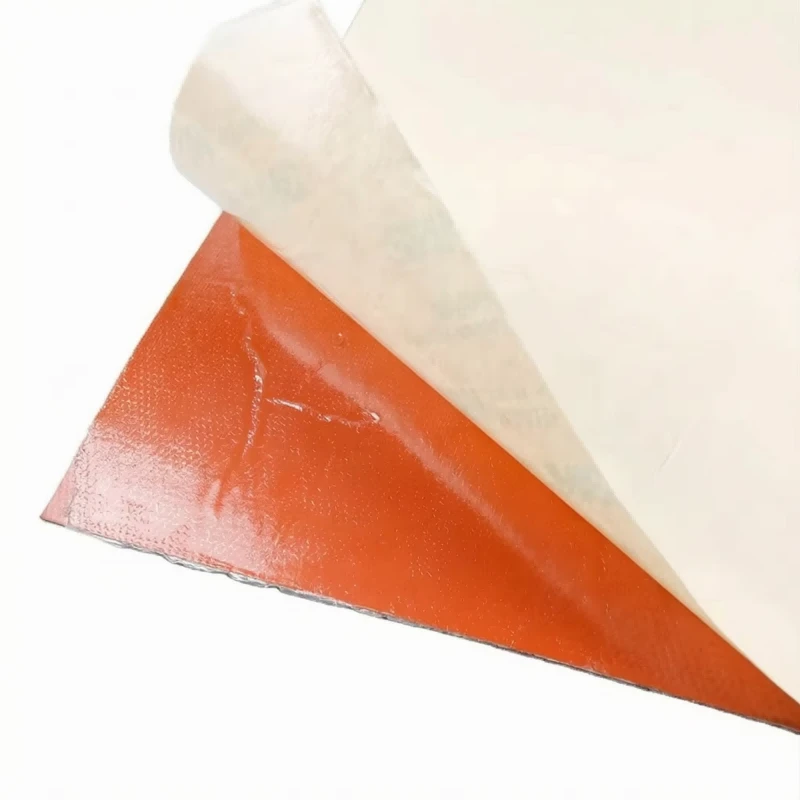
- High-Temperature RTV Silicone Adhesives: For extreme environments experiencing severe thermal shock or high vibration, vulcanizing RTV silicone provides a permanent, resilient bond that matches the thermal expansion coefficient of the heater.
- Mechanical Fastening: When securing a silicone heater adhesive layer is impractical (such as on removable process equipment), springs, straps, or vulcanized mechanical closures should be utilized.

3. Eliminating Air Gaps to Optimize Heat Transfer
Air is a notoriously poor thermal conductor (k ≈ 0.026 W/m·K). Trapped air pockets between a silicone heating pad and the target substrate create localized thermal barriers, hindering heat flux.
- Conformal Pressure: During installation, uniform pressure must be applied across the entire surface (using a roller or squeegee for adhesive types) to purge trapped air bubbles completely.
- Curvature Conformity: When wrapping around complex geometries, the heater must hug tight radii without lifting at the edges, ensuring 100% conductive contact.
4. Insulation Design and Silicone Heater Insulation
A properly installed heater must be paired with adequate external insulation to ensure thermal energy flows inward toward the process rather than radiating wastefully into the ambient environment.
- Mitigating Heat Loss: Unmanaged environmental heat loss reduces overall system efficiency and forces the heater to work harder, accelerating wear.
- Effective Silicone Heater Insulation: Layering closed-cell foam, fiberglass blankets, or aerogel over the exterior of the heater ensures optimal thermal retention, especially in outdoor or cold-room settings. Learn more about how these factors interact in our Silicone Rubber Heater Watt Density Guide.
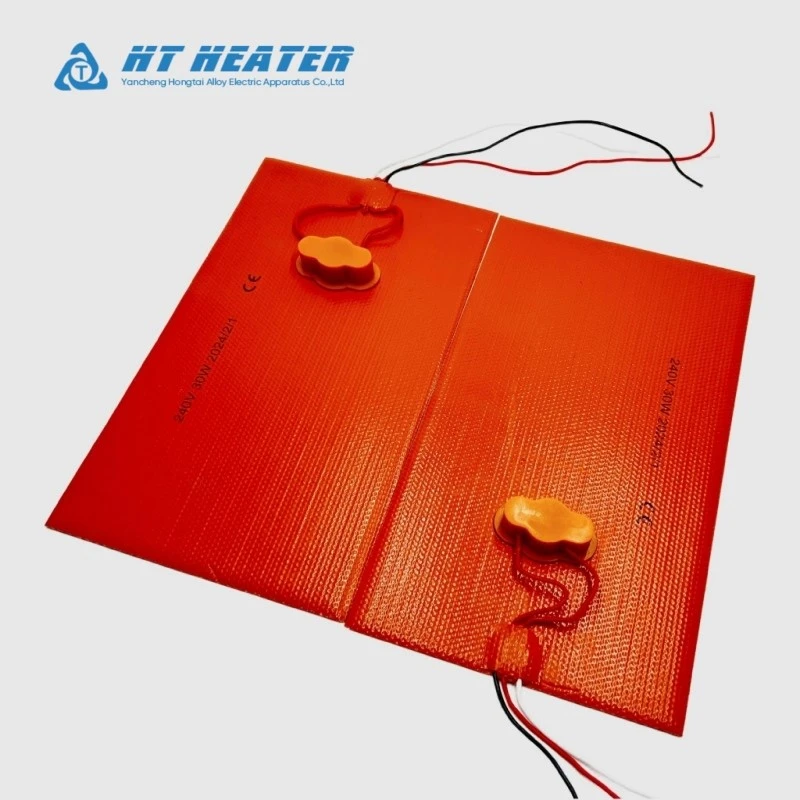
5. How Installation Impacts Silicone Heater Temperature Control
Poor thermal contact or missing insulation creates localized hot spots and thermal lag. This directly compromises silicone heater temperature control, causing controllers to overshoot or cycle erratically because the sensor reads delayed feedback from the fluid core.
- Proper sensor placement and tight mechanical contact ensure that your Silicone Rubber Heater Temperature Control Guide strategies perform accurately in real-world conditions. For selecting the right hardware configuration initially, review our Silicone Rubber Heater Selection Guide.
Partner with Hongtai for Specifying Your Custom Silicone Heating Pad
Every industrial assembly has unique spatial, electrical, and thermal constraints. Whether you need a permanent bonded unit or a detachable assembly (explore our comparison in Silicone Rubber Heating Pads vs. Heating Blankets), engineering the installation parameters upfront guarantees long-term reliability.
Translating theoretical thermal calculations into a robust physical installation requires evaluating substrate compatibility, adhesive limits, and overall insulation strategies. When specifying your next flexible heating assembly, provide your substrate material, operating temperatures, and environmental constraints.
The engineering team at Hongtai Heater Factory can design custom silicone heaters equipped with factory-applied PSAs, vulcanized sensors, and tailored installation configurations.
[Contact Hongtai Engineering with Your Custom Heater Installation Requirements]