

Welcome to an in-depth exploration of RoHS-Certified Mini Pt100 sensors and their pivotal role in aerospace applications. If you're involved in aviation, spacecraft design, or temperature measurement technologies, you've likely encountered the critical need for reliable, compact, and environmentally compliant sensors. In this article, we'll dive into everything you need to know about these specialized devices, from their fundamental principles to their implementation in high-stakes aerospace environments. The aerospace industry demands unparalleled precision and safety, where even minor temperature fluctuations can impact engine performance, structural integrity, and passenger comfort. RoHS-Certified Mini Pt100 sensors represent a fusion of miniaturization expertise and regulatory adherence, making them ideal for modern aerospace challenges. We'll break down their features, benefits, and applications, ensuring you gain practical insights without the jargon. By the end, you'll understand why these sensors are becoming the gold standard in aerospace temperature monitoring and how to leverage them effectively in your projects. Let's embark on this journey to uncover the intricacies of RoHS-Certified Mini Pt100 sensors and their transformative impact on the skies and beyond.
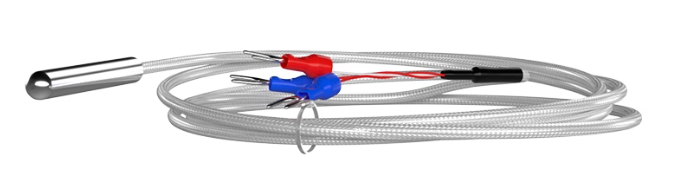
Introduction to Pt100 Temperature Sensors
Pt100 temperature sensors are a cornerstone of precise temperature measurement across various industries, including aerospace. At their core, these sensors utilize platinum's predictable resistance changes with temperature fluctuations, offering high accuracy and stability. The "Pt" stands for platinum, and "100" denotes a resistance of 100 ohms at 0°C, which serves as a reference point. This linear relationship between resistance and temperature makes Pt100 sensors exceptionally reliable for applications where even slight deviations can lead to significant consequences. In aerospace, for instance, monitoring engine temperatures or cabin conditions requires sensors that can withstand extreme environments while delivering consistent data. Pt100 sensors excel due to their wide temperature range, typically from -200°C to over 600°C, and their resistance to oxidation and corrosion. Historically, they've evolved from bulky designs to more compact versions, enabling integration into tight spaces without compromising performance. Understanding the basics of Pt100 sensors is crucial because they form the foundation upon which miniaturized and RoHS-certified variants are built. As we delve deeper, we'll see how these attributes align with aerospace needs, such as real-time monitoring in jet engines or thermal management in satellites. Moreover, their compatibility with digital systems allows for seamless data logging and analysis, enhancing overall system efficiency. In summary, Pt100 sensors are not just components; they are enablers of safety and innovation in high-tech fields.
Key advantages of Pt100 sensors:
* High accuracy and repeatability across a broad temperature spectrum.
* Excellent long-term stability, reducing the need for frequent recalibration.
* Compatibility with various instrumentation and control systems.
* **Common types include wire-wound and thin-film designs**, each offering distinct benefits for different applications.
What Makes Pt100 Sensors Ideal for Precision Measurement
Pt100 sensors are renowned for their precision, which stems from platinum's inherent properties, such as its high melting point and minimal drift over time. In precision measurement, especially in aerospace, factors like linearity, response time, and immunity to environmental stressors are paramount. Pt100 sensors exhibit a nearly linear resistance-temperature curve, simplifying calibration and data interpretation. For example, in aircraft engine monitoring, where temperatures can soar rapidly, the sensor's quick response time ensures timely alerts for potential issues, preventing catastrophic failures. Additionally, their low hysteresis means that measurements remain consistent whether temperatures are rising or falling, a critical feature in cyclic environments like space missions. The sensors' ability to maintain accuracy under vibration and shock-common in aerospace-further solidifies their suitability. Compared to other temperature sensors like thermocouples or thermistors, Pt100s offer superior accuracy and stability, though they may come at a higher cost. However, in aerospace, the investment is justified by the need for reliability and compliance with stringent standards. Furthermore, Pt100 sensors can be integrated with advanced signal conditioning circuits, enhancing their output for digital systems. This integration supports predictive maintenance in aerospace, where data analytics help foresee component wear. In essence, the ideal nature of Pt100 sensors for precision measurement lies in their robustness, linearity, and adaptability, making them indispensable in scenarios where every degree counts.
The Science Behind Platinum Resistance Thermometers
Platinum Resistance Thermometers (PRTs), including Pt100 sensors, operate on the principle that platinum's electrical resistance changes predictably with temperature. This relationship is defined by international standards, such as IEC 60751, which specifies the resistance-temperature characteristics for industrial PRTs. The science involves the crystal structure of platinum, where increased thermal energy causes lattice vibrations that impede electron flow, thereby increasing resistance. For Pt100 sensors, the resistance at 0°C is 100 ohms, and it increases approximately 0.385 ohms per degree Celsius in the standard range, following a curve that can be modeled mathematically. This predictability allows for high-accuracy measurements, often within ±0.1°C or better, depending on the sensor class. In aerospace applications, this scientific foundation is crucial because it enables reliable temperature sensing in critical systems, such as fuel lines or avionics bays, where errors could lead to inefficiencies or hazards. Moreover, the use of high-purity platinum ensures minimal degradation over time, even in harsh conditions like high altitudes or space vacuum. The design often includes protective sheaths made from materials like stainless steel or Inconel to shield the sensing element from corrosion and physical damage. Understanding this science helps in selecting the right sensor for specific aerospace needs, such as choosing between 2-wire, 3-wire, or 4-wire configurations to minimize lead resistance effects. In summary, the robust scientific basis of platinum resistance thermometers underpins their reliability, making them a trusted choice for demanding environments.
The Evolution to Mini Pt100 Sensors
The evolution to Mini Pt100 sensors marks a significant advancement in temperature measurement technology, driven by the growing demand for compact, high-performance devices in industries like aerospace. Traditional Pt100 sensors, while accurate, were often bulky and limited in their application to confined spaces. The miniaturization process involved innovations in materials and manufacturing, such as using thin-film platinum elements deposited on ceramic substrates, which reduced size without sacrificing accuracy. This shift enabled sensors to be integrated into areas previously inaccessible, like turbine blades or electronic components in satellites. In aerospace, the push for lighter and more efficient systems fueled this evolution, as every gram saved can translate to fuel efficiency and cost savings. Mini Pt100 sensors typically feature diameters as small as 1-3 mm and lengths under 10 mm, allowing for minimal intrusion while maintaining the core benefits of standard Pt100s. Their development also involved enhancing durability to withstand aerospace-specific challenges, including extreme temperatures, vibrations, and radiation exposure. For instance, in unmanned aerial vehicles (UAVs), these sensors provide critical thermal data for battery management and motor control. The evolution hasn't stopped at size reduction; it includes improvements in response times and compatibility with microelectronics, facilitating real-time monitoring in smart aerospace systems. As we look ahead, the trend toward even smaller sensors continues, with nanotechnology playing a role. This progression underscores how mini Pt100 sensors are not just smaller versions but optimized tools that address the unique constraints of modern aerospace engineering.

Advantages of Miniaturization in Temperature Sensing
Miniaturization in temperature sensing, particularly with Mini Pt100 sensors, offers numerous advantages that are especially beneficial in aerospace applications. First and foremost, reduced size allows for installation in compact and complex geometries, such as inside engine compartments or along narrow fuel lines, where space is at a premium. This capability enhances the granularity of temperature monitoring, enabling more precise control over systems like environmental control units or thermal protection shields. In aerospace, weight savings are critical; mini sensors contribute to lighter overall systems, which can improve fuel efficiency and payload capacity in aircraft and spacecraft. Additionally, smaller sensors often have faster response times due to their reduced thermal mass, meaning they can detect temperature changes more quickly-a vital feature in dynamic environments like re-entry phases or engine startups. This rapid response helps in preventing overheating or icing incidents, thereby boosting safety. Miniaturization also facilitates integration with other microdevices, such as MEMS (Micro-Electro-Mechanical Systems), leading to smarter, more interconnected aerospace networks. For example, in satellite constellations, mini Pt100 sensors can be part of IoT-like systems that relay data for autonomous decision-making. However, challenges like ensuring adequate mechanical strength and calibration accuracy must be addressed, but advances in materials science have largely overcome these issues. In summary, the advantages of miniaturization extend beyond mere size reduction; they encompass improved performance, efficiency, and adaptability, making mini Pt100 sensors a game-changer in aerospace temperature management.
Benefits include:
* Enhanced spatial resolution for detailed thermal mapping.
* Lower power consumption, ideal for battery-operated aerospace systems.
* Easier retrofitting into existing designs without major modifications.
Key Features of Mini Pt100 Models
Mini Pt100 models come with a set of key features that make them stand out in demanding fields like aerospace. One of the primary features is their compact dimensions, often with probe diameters under 2 mm and minimal insertion lengths, allowing for non-obtrusive installation in tight spaces. Despite their small size, they maintain high accuracy, typically within Class A or B tolerances as per IEC 60751, ensuring reliable data even in critical applications. Another notable feature is their robust construction; many mini Pt100 sensors are built with materials like 316 stainless steel or platinum-coated ceramics to resist corrosion, abrasion, and high pressures-common in aerospace environments. They also offer excellent long-term stability, with minimal drift over years of use, which reduces maintenance needs and costs. The response time is another critical feature, with many models achieving time constants of less than a second in air, enabling quick detection of thermal shifts. Additionally, mini Pt100 sensors are designed for easy integration, with options for various connection types, such as threaded fittings or spring-loaded contacts, to suit different mounting requirements. In terms of electrical characteristics, they support 2-wire, 3-wire, or 4-wire configurations, with 3-wire being popular in aerospace for its balance of accuracy and simplicity. Some advanced models include built-in signal conditioning or digital outputs, streamlining compatibility with flight control systems. These features collectively ensure that mini Pt100 sensors deliver precision, durability, and versatility, making them indispensable for aerospace temperature monitoring.
Understanding RoHS Certification
RoHS certification, which stands for Restriction of Hazardous Substances, is a critical compliance standard originating from the European Union's RoHS Directive (2002/95/EC). It restricts the use of specific hazardous materials in electrical and electronic equipment to protect human health and the environment. For Mini Pt100 sensors used in aerospace, RoHS certification ensures that these devices are free from substances like lead, mercury, cadmium, hexavalent chromium, polybrominated biphenyls (PBB), and polybrominated diphenyl ethers (PBDE), among others. This certification is not just a regulatory hoop to jump through; it represents a commitment to sustainability and safety, which aligns with the aerospace industry's growing emphasis on eco-friendly practices. The process involves rigorous testing and documentation by accredited bodies to verify that each component of the sensor, from the platinum element to the wiring and housing, complies with the stipulated limits. In aerospace, where equipment may be exposed to extreme conditions or eventually decommissioned, RoHS compliance reduces the risk of toxic leakage during disposal or recycling. Moreover, it often correlates with higher reliability, as hazardous substances can degrade performance over time-for instance, lead-based solders might fail under thermal cycling. Understanding RoHS certification helps aerospace engineers make informed choices, ensuring that their temperature sensing solutions not only meet technical specs but also adhere to global environmental standards. This awareness is part of a broader trend toward greener aerospace technologies, supporting initiatives like reduced carbon footprints and circular economy principles.
What is the RoHS Directive?
The RoHS Directive, formally known as Directive 2002/95/EC of the European Parliament, was established to limit the use of hazardous substances in electrical and electronic equipment (EEE). Enacted in 2003 and subsequently updated (e.g., RoHS 2 and RoHS 3), it aims to minimize environmental pollution and health risks associated with the disposal of EEE. The directive originally focused on six substances but has expanded to include additional ones like certain phthalates. For industries like aerospace, which increasingly source components globally, compliance with RoHS is essential for market access, especially in regions with strict environmental regulations. The directive requires manufacturers to ensure that their products, including Mini Pt100 sensors, do not exceed the maximum concentration values for restricted substances-typically 0.1% by weight for most, and 0.01% for cadmium. This has driven innovations in material science, leading to the development of alternative, safer materials without compromising performance. In aerospace, where components must endure harsh conditions, RoHS-compliant sensors often undergo additional testing to verify that substitutes do not affect durability or accuracy. Understanding the RoHS Directive also involves recognizing its exemptions; for instance, some aerospace applications might have temporary exclusions for critical uses, but the trend is toward full compliance. Overall, the directive has reshaped manufacturing practices, promoting a shift toward greener electronics that benefit both the planet and end-users in high-stakes industries.
The List of Restricted Substances
The list of restricted substances under RoHS includes materials known for their toxicity and environmental persistence, and it's crucial for anyone specifying Mini Pt100 sensors in aerospace to be familiar with it. The core restricted substances are lead (Pb), mercury (Hg), cadmium (Cd), hexavalent chromium (CrVI), polybrominated biphenyls (PBB), and polybrominated diphenyl ethers (PBDE). Additionally, RoHS 3 added four phthalates: bis(2-ethylhexyl) phthalate (DEHP), butyl benzyl phthalate (BBP), dibutyl phthalate (DBP), and diisobutyl phthalate (DIBP). Each of these poses specific risks; for example, lead can cause neurological damage, while cadmium is carcinogenic and can leach into soil and water. In the context of Mini Pt100 sensors, this means that elements like solder joints, connector coatings, and even the sensor sheath must be free from these substances. For aerospace applications, where sensors might be subjected to high temperatures or mechanical stress, using RoHS-compliant materials ensures that no hazardous byproducts are released during operation or end-of-life disposal. This is particularly important in space missions, where debris re-entry could pose environmental threats. Manufacturers often provide documentation, such as certificates of compliance, to verify that their sensors meet these requirements. By adhering to this list, aerospace projects not only comply with regulations but also contribute to safer working environments and sustainable innovation. In summary, knowing the restricted substances helps in selecting sensors that align with both performance needs and ethical standards.
Why RoHS Certification is Critical in Aerospace
RoHS certification is critical in aerospace for multiple reasons, ranging from regulatory compliance to enhanced safety and corporate responsibility. Aerospace systems, whether in commercial aircraft or satellites, operate in environments where reliability is non-negotiable, and the use of hazardous substances could compromise this. For instance, lead-free components in RoHS-certified Mini Pt100 sensors reduce the risk of solder joint failures under thermal cycling, which is common during flight cycles or space launches. This directly contributes to system longevity and reduces the likelihood of in-flight incidents. Moreover, the aerospace industry is globally interconnected, with supply chains spanning continents; RoHS certification ensures smooth market access, especially in regions like Europe where it's mandatory for electronic imports. Environmental considerations are also paramount-aerospace companies face increasing pressure to adopt sustainable practices, and using RoHS-compliant sensors supports initiatives like reducing electronic waste and minimizing toxic footprints. In terms of safety, hazardous substances could pose health risks to maintenance personnel or, in worst-case scenarios, lead to contamination if a device fails. Additionally, RoHS certification often overlaps with other standards, such as REACH or ISO 14001, fostering a culture of continuous improvement. For Mini Pt100 sensors, this means they are not only precise but also ethically produced, aligning with the aerospace sector's reputation for innovation and responsibility. Ultimately, RoHS certification is a proactive step toward future-proofing aerospace technologies against evolving regulations and societal expectations.
Safety and Environmental Considerations
Safety and environmental considerations are at the heart of using RoHS-certified Mini Pt100 sensors in aerospace. From a safety perspective, these sensors help prevent accidents by providing accurate temperature data for critical systems like engines, brakes, or life support units. The absence of hazardous substances means that in the event of a fire or mechanical failure, there's a lower risk of toxic fume release, protecting both passengers and crew. For example, in cabin air systems, RoHS-compliant sensors ensure that no harmful materials off-gas during operation, maintaining air quality. Environmentally, aerospace has a significant impact due to fuel consumption and waste generation; RoHS certification supports eco-friendly disposal and recycling of components at the end of their lifecycle. This is especially relevant for satellites, which may de-orbit and burn up in the atmosphere-using non-hazardous materials minimizes atmospheric pollution. Additionally, the manufacturing process for RoHS-certified sensors often involves greener practices, such as reduced energy consumption and waste, contributing to lower carbon emissions overall. In terms of regulatory compliance, adhering to RoHS helps aerospace companies avoid fines and reputational damage, while also meeting customer demands for sustainability. These considerations extend to supply chain management, where sourcing RoHS-compliant parts promotes ethical labor practices and resource conservation. By prioritizing safety and the environment, the aerospace industry not only mitigates risks but also pioneers responsible innovation, with Mini Pt100 sensors playing a key role in this endeavor.
Regulatory Compliance in the Aerospace Industry
Regulatory compliance in the aerospace industry is a complex web of international standards and laws that ensure safety, reliability, and environmental stewardship. For components like RoHS-certified Mini Pt100 sensors, compliance involves adhering to multiple frameworks beyond RoHS, such as FAA (Federal Aviation Administration) regulations in the U.S., EASA (European Union Aviation Safety Agency) rules in Europe, and space-specific guidelines from organizations like NASA or ESA. These regulations often mandate that electronic devices, including temperature sensors, meet specific performance and safety criteria, and RoHS certification dovetails with these requirements by addressing material hazards. For instance, in aircraft certification processes, suppliers must demonstrate that their sensors do not introduce risks through toxic substances, which could affect airworthiness. Compliance also involves documentation and traceability, where manufacturers provide detailed records of material sourcing and testing results. In the global aerospace market, this ensures interoperability and trust among stakeholders, from OEMs to maintenance crews. Moreover, regulatory bodies are increasingly incorporating environmental standards into their frameworks, making RoHS compliance a de facto requirement for new projects. For Mini Pt100 sensors, this means that designers must select models that are not only accurate and durable but also fully documented for audits. Non-compliance can lead to grounded aircraft, legal penalties, or loss of contracts, highlighting its importance. Ultimately, navigating regulatory landscapes requires a proactive approach, where RoHS certification serves as a foundation for broader compliance efforts in aerospace.

Applications of RoHS-Certified Mini Pt100 in Aerospace
The applications of RoHS-Certified Mini Pt100 sensors in aerospace are diverse and critical to the industry's advancement. These sensors are deployed in various subsystems where precise temperature monitoring is essential for performance, safety, and efficiency. In commercial aviation, they are used in engine monitoring systems to track turbine temperatures, ensuring optimal combustion and preventing overheating that could lead to engine failure. Similarly, in environmental control systems, they help maintain cabin temperature and humidity, enhancing passenger comfort while managing energy use. In spacecraft and satellites, mini Pt100 sensors play a vital role in thermal management, monitoring components like batteries and electronics to prevent damage from extreme temperature swings in orbit. Their RoHS certification adds an extra layer of assurance that no hazardous materials will compromise missions or contribute to space debris concerns. Unmanned aerial vehicles (UAVs) also benefit from these sensors, particularly in battery thermal management, where they help prevent fires or efficiency losses. Additionally, in aviation hydraulics and fuel systems, temperature data from mini Pt100 sensors inform maintenance schedules and operational adjustments. The compact size allows for integration into advanced composites or smart skins, enabling real-time structural health monitoring. As aerospace evolves toward more electric and autonomous systems, the role of these sensors expands, supporting IoT applications where data is wirelessly transmitted for analysis. In summary, RoHS-certified Mini Pt100 sensors are versatile tools that address the unique challenges of aerospace, from routine flights to cutting-edge space exploration.
Aircraft Engine Monitoring Systems
Aircraft engine monitoring systems rely heavily on RoHS-certified Mini Pt100 sensors to ensure safe and efficient operation. These systems continuously track temperatures in critical areas like the compressor, turbine, and exhaust sections, providing data that helps optimize fuel efficiency and detect anomalies before they escalate. For example, in jet engines, mini Pt100 sensors are embedded near hot sections to monitor thermal gradients, allowing for adjustments that prevent thermal fatigue and extend engine life. The RoHS certification is crucial here because it ensures that the sensors do not contain substances that could degrade under high heat and cause failures. In modern engines, which operate at temperatures exceeding 1000°C, the sensors' accuracy and stability are paramount; even a small error could lead to inefficient combustion or, worse, engine stall. The data from these sensors is often fed into full authority digital engine control (FADEC) systems, which automate responses to temperature changes, enhancing reliability. Additionally, in predictive maintenance programs, temperature trends identified by mini Pt100 sensors help schedule repairs during downtime, reducing operational costs and improving safety. The miniaturization aspect allows for placement in confined spaces without affecting airflow or engine dynamics. Overall, these sensors are indispensable in engine monitoring, contributing to the aviation industry's impressive safety record and continuous improvement in performance.
Real-Time Temperature Data for Engine Health
Real-time temperature data provided by RoHS-certified Mini Pt100 sensors is a cornerstone of engine health monitoring in aerospace. This data enables continuous assessment of engine conditions, allowing for immediate detection of issues like overheating, icing, or component wear. In practice, sensors transmit temperature readings to onboard computers, which analyze them against predefined thresholds to trigger alerts or automated responses. For instance, if a sensor detects an abnormal rise in turbine temperature, it might signal the FADEC system to adjust fuel flow or initiate a shutdown procedure to prevent damage. The real-time capability is enhanced by the sensors' fast response times and high accuracy, ensuring that data reflects current conditions accurately. This is vital in dynamic flight phases, such as takeoff or landing, where temperatures can change rapidly. Moreover, historical data collected from these sensors supports trend analysis, helping engineers identify patterns that predict future failures. In terms of engine health, this proactive approach reduces unscheduled maintenance and extends the lifespan of expensive components. The RoHS certification adds reliability by ensuring that the sensors themselves are free from materials that could cause intermittent failures under stress. In summary, real-time temperature data from mini Pt100 sensors transforms engine management from reactive to predictive, bolstering safety and efficiency in aerospace operations.
Avionics and Cabin Environment Control
Avionics and cabin environment control systems in aerospace benefit significantly from RoHS-certified Mini Pt100 sensors, which ensure optimal temperatures for both equipment and passengers. Avionics, which include flight control computers, navigation systems, and communication devices, are sensitive to temperature variations; excessive heat can lead to malfunctions or reduced lifespan. Mini Pt100 sensors monitor these components, providing data to cooling systems that maintain safe operating ranges. In the cabin, temperature control is essential for passenger comfort and health, especially on long-haul flights. These sensors are integrated into air distribution systems to regulate heating and cooling, often working in tandem with humidity sensors for a balanced environment. The RoHS certification is important here because it guarantees that no hazardous substances are released into the cabin air, aligning with indoor air quality standards. Additionally, the compact size of mini sensors allows for discreet installation in overhead panels or seats, minimizing visual impact while maximizing coverage. In emergency situations, such as loss of pressurization, temperature data can inform automated responses to ensure survival conditions. The use of these sensors also supports energy efficiency by enabling precise control, reducing the load on aircraft power systems. Overall, in avionics and cabin environments, RoHS-certified Mini Pt100 sensors contribute to a safer, more comfortable, and reliable flying experience.
Ensuring Passenger Comfort and System Efficiency
Ensuring passenger comfort and system efficiency is a key goal in aerospace, and RoHS-certified Mini Pt100 sensors play a pivotal role in achieving this. For passenger comfort, these sensors provide accurate temperature readings that help maintain a pleasant cabin environment, whether it's a short domestic flight or an intercontinental journey. Discomfort from temperature extremes can lead to health issues or dissatisfaction, so sensors enable automated systems to adjust heating, ventilation, and air conditioning (HVAC) in real time. This not only improves the traveler experience but also reduces crew workload. In terms of system efficiency, temperature data from mini Pt100 sensors allows for optimized operation of various aircraft systems, such as reducing energy consumption in environmental control units or preventing overheating in galley equipment. The RoHS certification ensures that these efficiency gains do not come at an environmental cost, supporting sustainable aviation initiatives. Moreover, by preventing temperature-related failures, these sensors minimize delays and maintenance costs, contributing to overall operational efficiency. In modern aircraft, data from these sensors can be integrated with passenger feedback systems for continuous improvement. In essence, the dual focus on comfort and efficiency underscores how RoHS-certified Mini Pt100 sensors enhance both human factors and technical performance in aerospace.

Selecting the Right RoHS-Certified Mini Pt100
Selecting the right RoHS-certified Mini Pt100 sensor for aerospace applications involves evaluating several factors to ensure it meets specific operational needs. First, consider the temperature range; aerospace environments can vary from cryogenic conditions in space to high heat in engines, so choose a sensor with a range that covers your requirements, typically -200°C to 600°C or beyond. Accuracy is another critical factor-look for Class A sensors (±0.15°C at 0°C) for high-precision tasks or Class B (±0.3°C) for less critical areas. The sensor's response time should align with the application's dynamics; for instance, fast-changing environments need time constants under one second. Construction materials must be compatible with aerospace conditions, such as stainless steel for corrosion resistance or Inconel for high-temperature durability. RoHS certification should be verified through supplier documentation, ensuring all restricted substances are absent. Additionally, consider the electrical configuration: 2-wire for simple setups, 3-wire to compensate for lead resistance, or 4-wire for maximum accuracy. Mounting options, like threaded fittings or adhesive pads, should suit the installation site. It's also wise to assess compatibility with existing systems, such as signal conditioners or data acquisition units. Finally, review the manufacturer's reputation and support, including calibration services and warranty.