

When engineering a thermal system for industrial manufacturing, selecting the right heat source is the foundation of long-term operational stability. For applications requiring consistent, non-contact, and highly efficient heat transfer, the ceramic infrared heater has become the undeniable industry standard.
Whether you are a junior design engineer tackling your first thermoforming machine project, or a purchasing manager sourcing reliable components for a global supply chain, understanding the mechanics of these heaters is critical. This comprehensive guide will walk you through the core technologies, selection criteria, and engineering principles of industrial IR heaters.
1. What is a Far Infrared Ceramic Heater?
At its core, a far infrared ceramic heater is a highly efficient thermal radiator. It operates by passing an electrical current through a resistance wire (typically a high-grade Nickel-Chrome alloy) embedded within a specially formulated refractory ceramic body.
Unlike convection heaters that waste energy heating the surrounding air, ceramic heaters emit electromagnetic radiation in the far-infrared spectrum (typically between 2 and 10 microns). This specific wavelength is highly absorbable by most plastics, organic materials, and water, allowing the radiant energy to directly penetrate and heat the target object with minimal heat loss.
2. Types of Ceramic Heater Elements
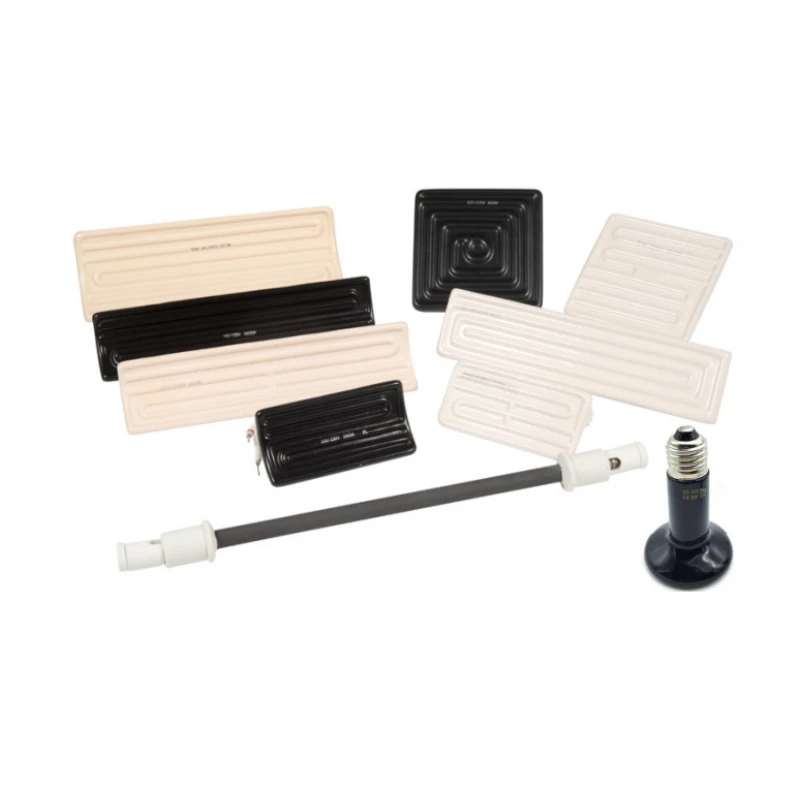
To accommodate diverse industrial applications, ceramic heater elements are manufactured in several standardized geometries. Selecting the correct shape is the first step in optimizing your machine's thermal profile.
Flat Ceramic Heaters (Trough Elements): Designed to produce a uniform, unidirectional heat pattern. These are the go-to choice for large-area surface heating, such as industrial drying ovens and large-scale textile manufacturing.
Curved / Arc Ceramic Heaters: The concave design naturally focuses the infrared radiation toward a central point or a specific target line. This geometry is extensively used in plastic thermoforming and vacuum forming machinery, where concentrated heat on specific material zones is required.
Hollow Ceramic Heaters: Engineered with an internal hollow cavity filled with thermal insulation material. This design dramatically reduces rearward heat loss, directing up to 90% of the energy forward. They offer exceptional energy savings and faster heat-up times.
Ceramic Bulb Heaters: Featuring a standard E27 Edison screw base, these bulbs are designed for simple installation in specific environments like livestock incubation, reptile enclosures, and small-scale food warming stations, providing 24/7 heat without emitting visible light.
3. Engineering Selection: Sizing Your Industrial IR Heaters
Proper specification prevents premature failure and ensures maximum return on investment. Engineers must evaluate three critical parameters before confirming a purchase order:
A. Watt Density and Power
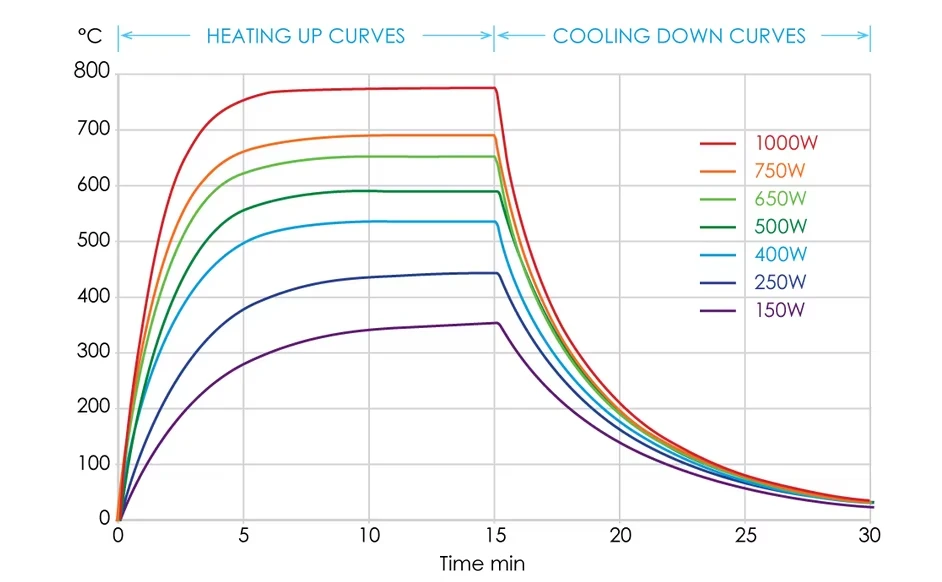
Watt density refers to the power output per unit of surface area. While high wattage might seem beneficial for faster heating, exceeding the safe watt density threshold of the ceramic material will cause the internal resistance wire to burn out. Always match the power output to the absorption rate of your target material.
B. Thermocouple Integration for PID Control
For precise closed-loop temperature control, it is highly recommended to specify ceramic heaters with a built-in thermocouple (typically Type K or Type J). By embedding the sensor directly adjacent to the resistance wire, the PID controller receives real-time, highly accurate temperature data, completely eliminating thermal lag and preventing material overheating.
C. Installation and Array Spacing
When building infrared heater panels, spacing is critical. Placing heaters too far apart creates "cold spots" (zebra striping) on the target material, while placing them too close can cause mutual overheating. Utilizing standard stainless steel mounting reflectors and maintaining proper gap tolerances ensures a homogeneous heat distribution.
4. Quality Control: Why Sourcing Matters
Not all ceramic heaters are created equal. The lifespan of a ceramic element is heavily dependent on the purity of the refractory clay, the quality of the glaze (which protects against moisture and corrosive gases), and the precision of the internal wire winding.
Partnering with a direct manufacturer ensures that every component is rigorously tested for electrical safety (CE/UL compliance), dielectric strength, and thermal uniformity before it leaves the factory. Customization options, including specific voltages, wattages, and lead wire lengths, are readily available to match your exact engineering drawings.
Optimize Your Thermal Process Today
Designing an efficient industrial heating system doesn't have to be a trial-and-error process. By leveraging the right ceramic infrared technology, you can significantly reduce cycle times, cut energy costs, and eliminate product defects.
Ready to specify the perfect heating elements for your equipment? Send your technical requirements or machine schematics to our engineering team, and we will provide a comprehensive thermal evaluation and sizing recommendation within 12 hours.